
The Most In-Demand AI Jobs in 2026: Salaries, Skills and Companies Hiring
By Editorial Team 2 weeks agoArtificial intelligence is changing the job market, but figuring out where the real opportunities are isn’t always easy. Every week brings another prediction about jobs AI will create, jobs it might replace, and skills everyone should learn.
So, where are employers actually looking for talent in 2026? And what does it take to compete for those jobs?
We reviewed labor-market research, job-posting data, salary guides, and LinkedIn’s latest ranking of fast-growing U.S. occupations to find out. The results point to a growing range of opportunities, from building AI systems to helping businesses put them to work.
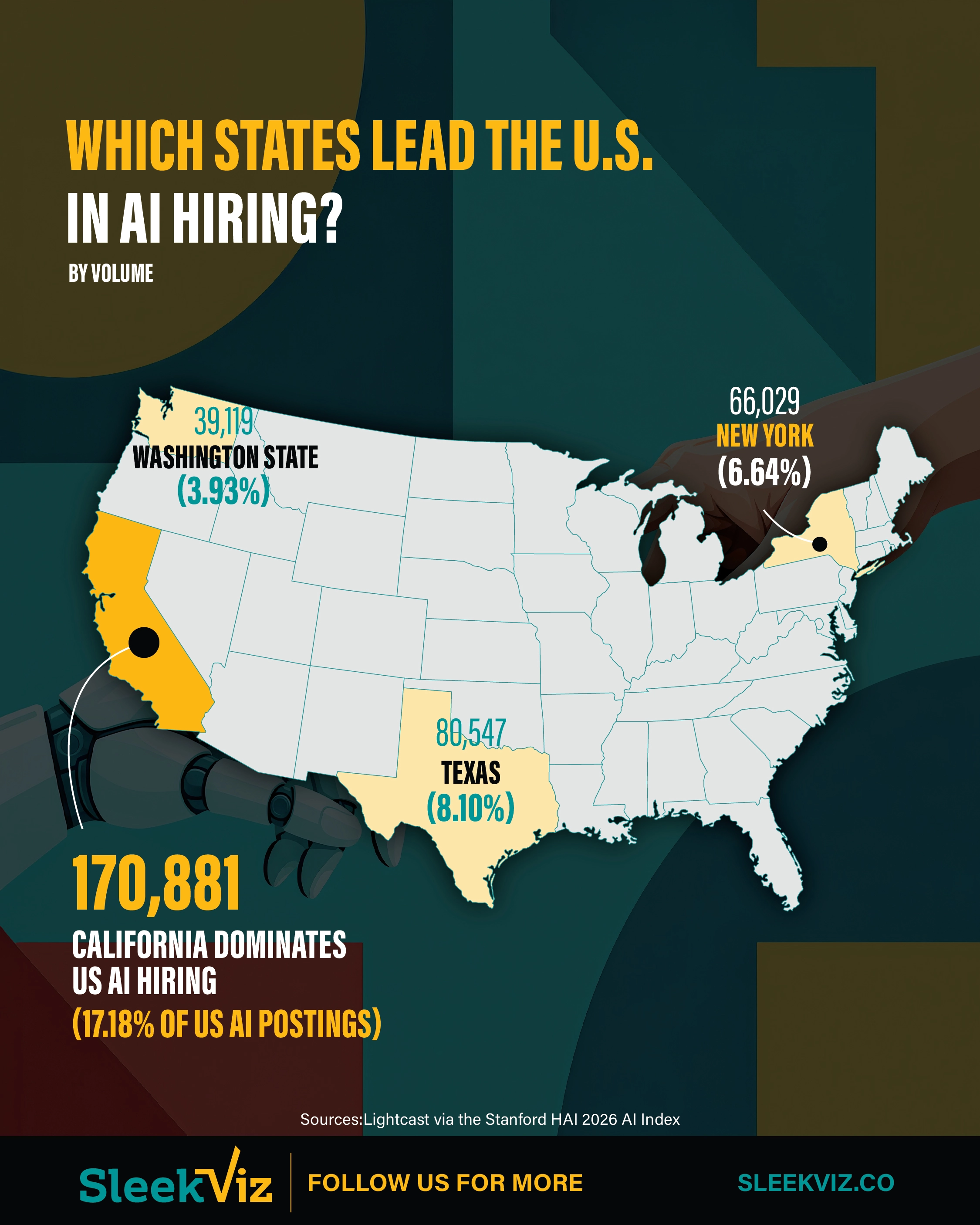
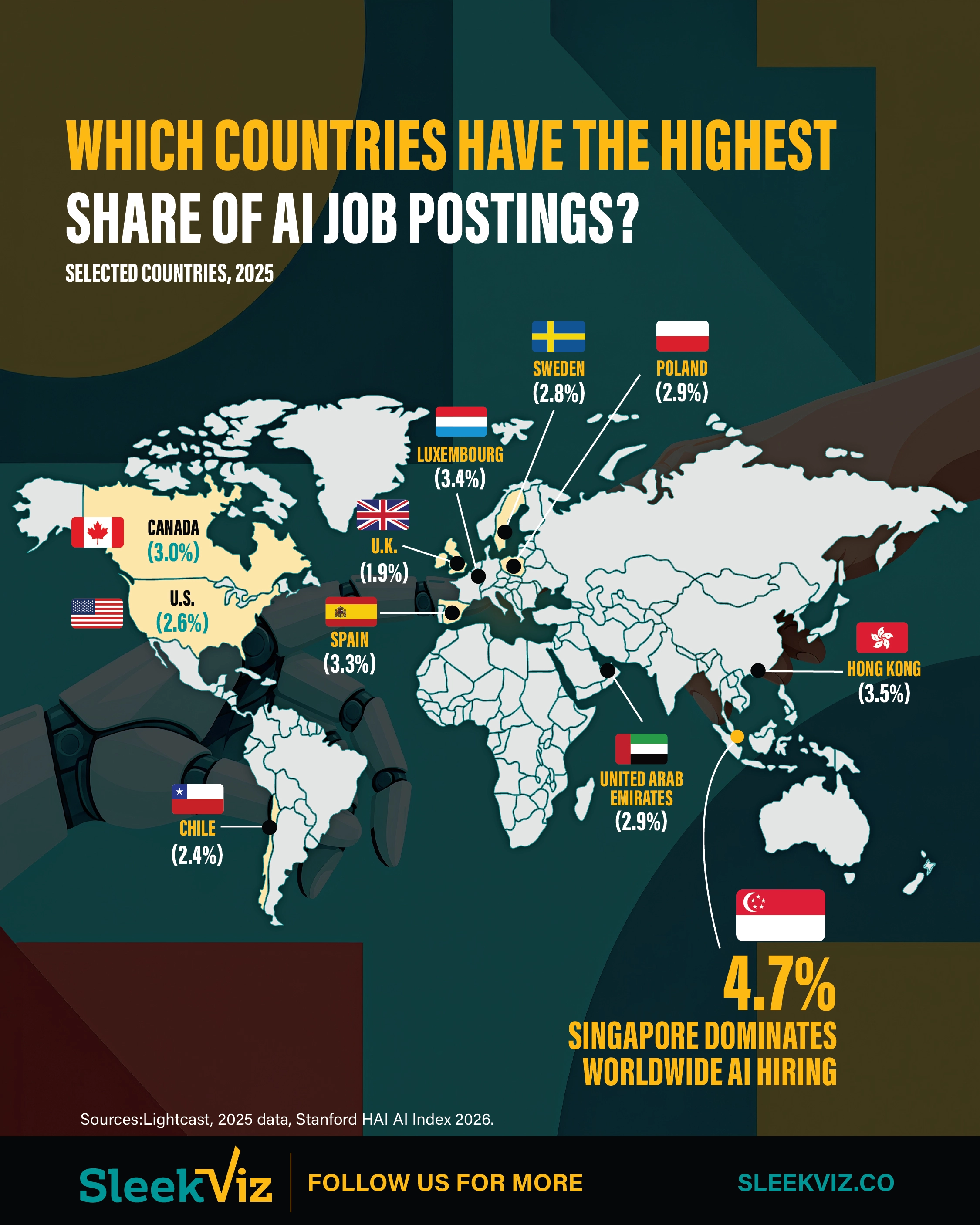
The AI job market is bigger than you might think
AI careers are often associated with engineers working at major technology companies. But the demand for AI skills extends beyond the companies developing the technology.
According to PwC’s 2026 Global AI Jobs Barometer, job postings requiring AI skills grew faster than overall job postings in its global analysis. The report also found that jobs requiring AI skills carried an average wage premium of 62% across the 27 countries studied.
That doesn’t mean every AI-related job pays 62% more, or that taking an AI course automatically increases your salary. It does suggest that employers value skills that help them use AI effectively.
There is another important distinction: not every AI job involves developing models or writing complex algorithms. Some positions focus on implementing AI tools, advising businesses, managing data, or helping organizations use the technology responsibly.
For job seekers, that creates more than one possible route into the field.
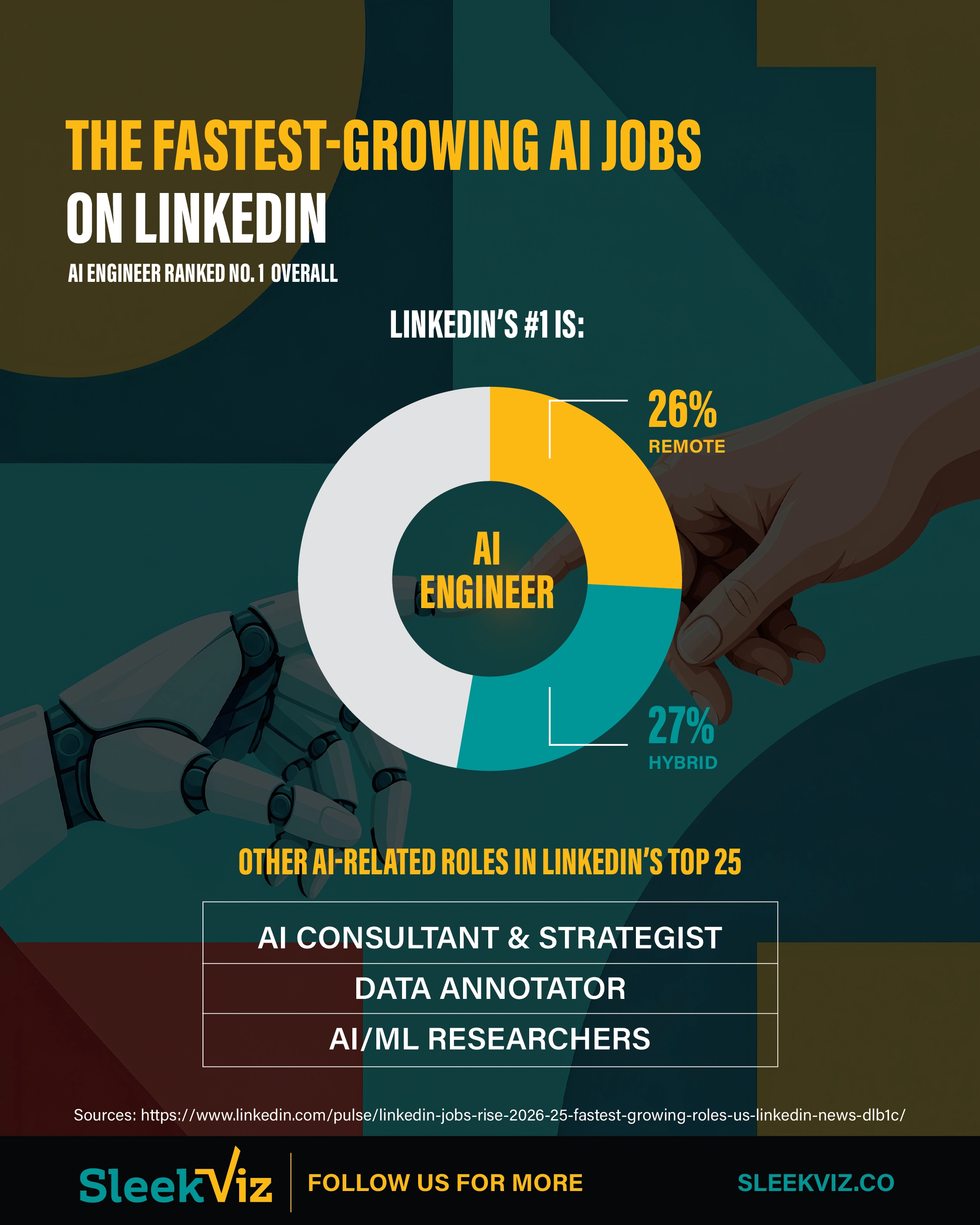
The AI jobs to watch in 2026
LinkedIn’s 2026 Jobs on the Rise ranking, reported by Dice, puts AI Engineer at No. 1 among the fastest-growing jobs in the United States. Three other AI-related titles also appear in the ranking’s top five.
Here are the four roles highlighted in our research:
1. AI Engineer
AI engineers build and implement systems that use artificial intelligence. Depending on the position, that can involve machine learning, integrating AI models into products, developing applications, and improving how those systems perform.
This is a strong option for people who enjoy programming, solving technical problems, and building things that work.
2. AI Consultant and Strategist
Businesses need more than access to AI tools. They need people who can identify where those tools make sense, assess business needs, and help teams put them to practical use.
This role can suit people who combine technical understanding with communication, business analysis, and problem-solving skills.
3. Data Annotator
AI systems need data to learn from and evaluate. Data annotators label, categorize, or review information used in training and testing models.
The work can provide exposure to how AI systems are developed, although responsibilities, pay, and career progression vary considerably between employers.
4. AI/ML Researcher
Researchers investigate new methods, test ideas, and develop improvements to artificial intelligence and machine learning systems. Depending on the role, the work may involve experiments, mathematics, programming, and advanced research.
Some positions require graduate-level education or substantial research experience, making this a more specialized path.
These rankings are about LinkedIn’s fastest-growing jobs, not a complete ranking of every AI occupation by total openings. That distinction matters when deciding which career to pursue.
Which AI skills and software should you learn?
A job title tells only part of the story. Employers also look for evidence that candidates can work with the tools and technologies used in their teams.
Python is one of the clearest priorities for technical AI careers. In an analysis of 43,480 U.S. AI/ML engineering postings, Axial Search found Python mentioned in 62% of postings. Its separate sample of 13,776 machine-learning engineering postings put the figure at 79%.
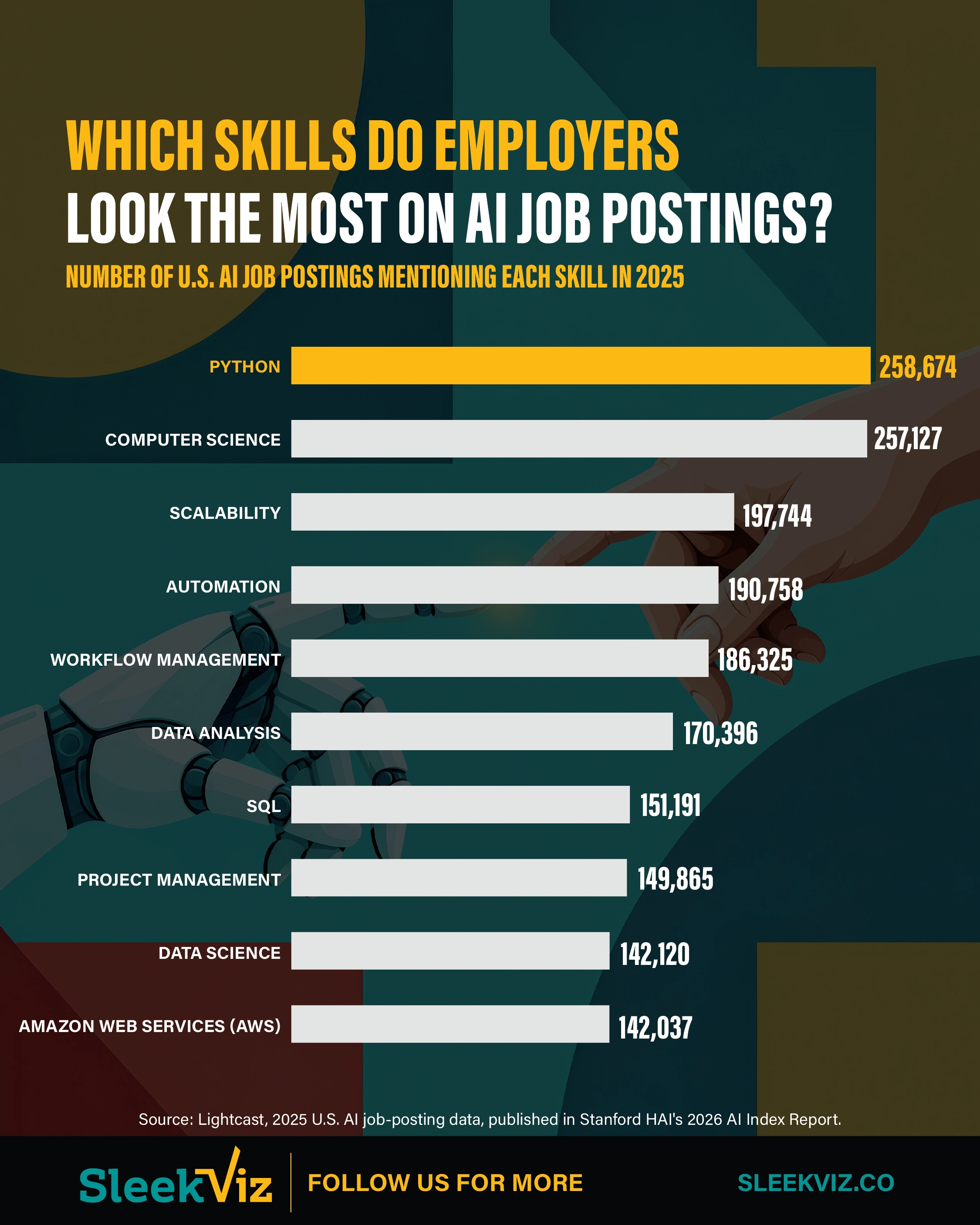
Other commonly requested technologies include:
PyTorch and TensorFlow: Frameworks used to develop and train machine-learning models.
AWS and Microsoft Azure: Cloud platforms used to build, deploy, and manage AI applications.
SQL: Useful for querying and working with structured data.
Deep learning: Techniques used in areas such as image recognition, language processing, and more complex AI systems.
MLOps: Practices for deploying, monitoring, and maintaining machine-learning systems.
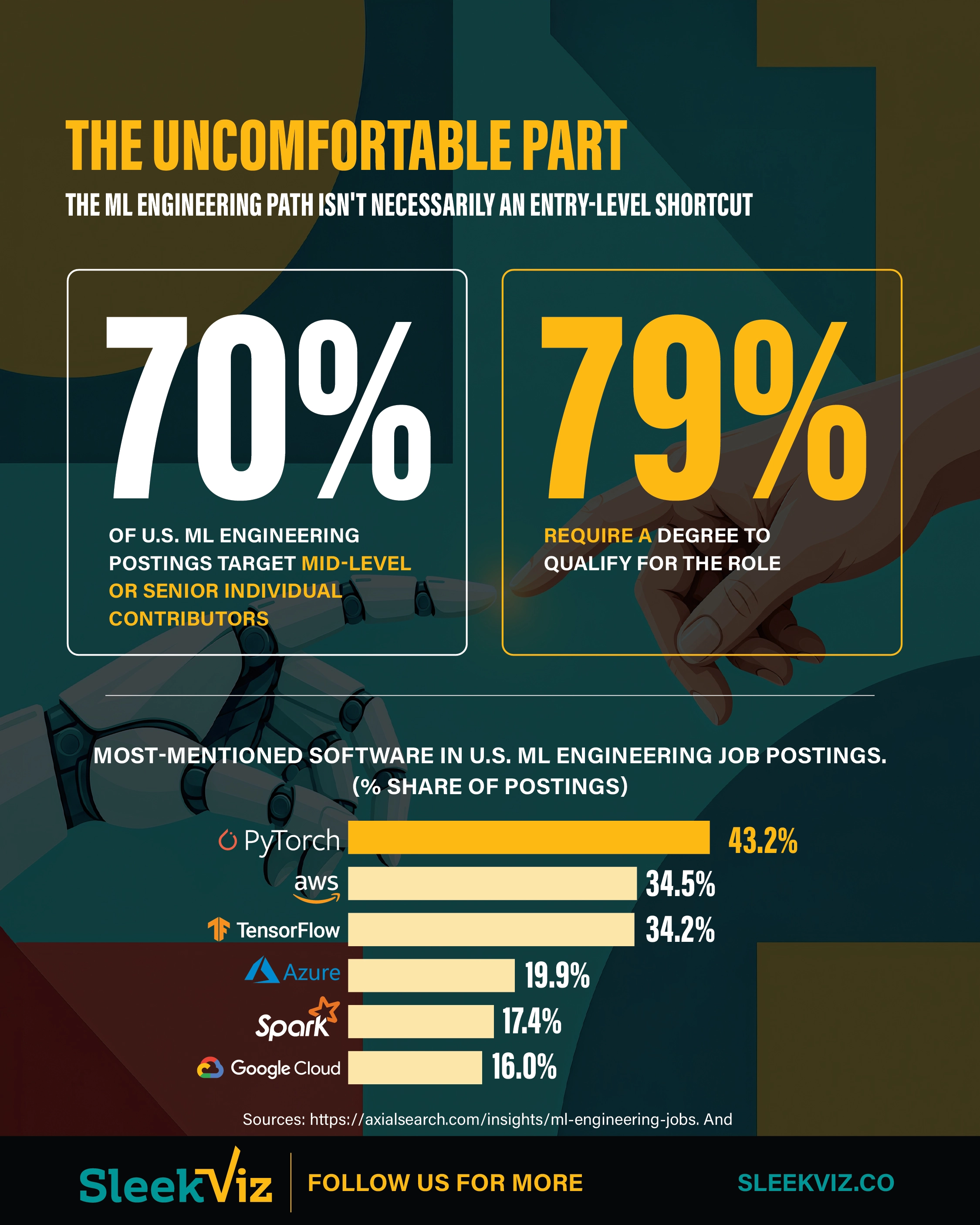
These figures come from different job-posting samples, so they should not be treated as universal percentages for every AI role. The tools needed by a researcher, consultant, and AI engineer can be quite different.
The best approach is to start with the requirements of the specific jobs you want, then build projects that demonstrate those skills. A long list of software names on a résumé is less convincing than showing what you can actually do with them.
What can AI professionals earn?
Salary is understandably one of the biggest questions for anyone considering a career change.
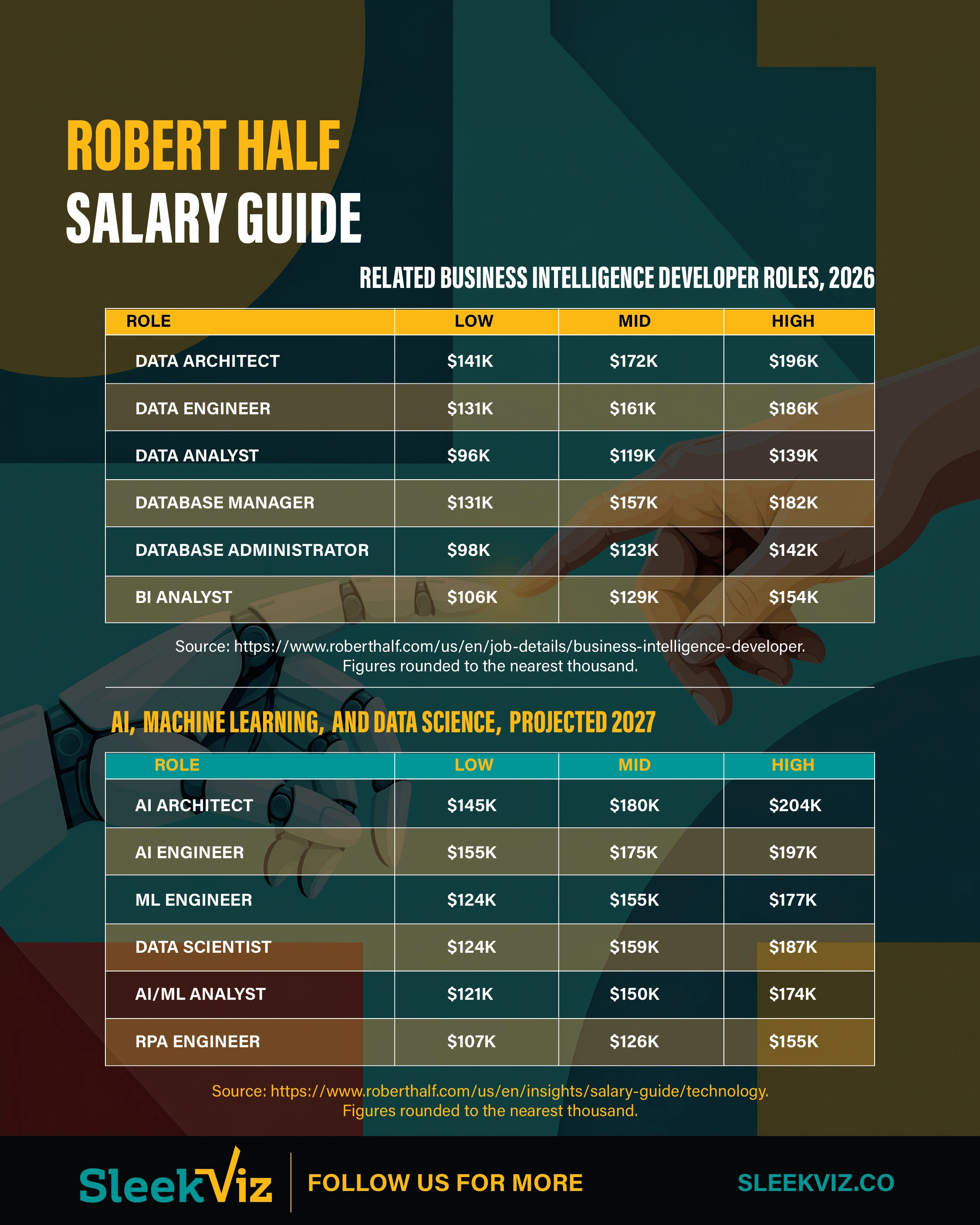
Robert Half’s technology salary guide provides national salary estimates for roles including AI engineers, AI architects, machine-learning engineers, and data scientists. The U.S. Bureau of Labor Statistics offers another useful reference point for related occupations.
For context, the BLS reported median annual pay of $120,230 for data scientists and $140,300 for computer and information research scientists, based on May 2025 wage data.
These are occupation-wide figures, not guaranteed starting salaries or salaries for every AI-specific position. Actual pay depends on experience, location, industry, employer, and the responsibilities of the role. Some salary guides also report total compensation, which may include bonuses and stock, rather than base salary alone.
Our accompanying guide compares salary estimates for several AI and data-related careers, including lower, middle, and higher salary benchmarks where available. The takeaway is simple: AI-related careers can pay well, but the title alone does not determine your earning potential.
Which companies are hiring?
AI hiring is not limited to companies whose main product is artificial intelligence.
A 2026 analysis by Veritone, using Aspen Technology Labs data, identified Amazon, Google, and Booz Allen Hamilton among the leading established employers by live AI job postings in the second quarter of 2026. The same snapshot identified Anduril, Databricks, and OpenAI among the leading startups.
These figures represent a specific snapshot of advertised positions, not a guarantee that the companies have the most openings today. Hiring needs change, and individual teams may be looking for very different skills.
If you are searching for a role, look beyond company names. Read the job descriptions, compare the requirements across several employers, and identify the skills that appear repeatedly in the positions you actually want.
Is it too late to get into AI?
No, but it is worth being realistic about the path.
Some technical positions expect substantial programming experience, knowledge of mathematics, or a relevant degree. Research-heavy jobs can have especially demanding requirements. An entry-level title does not always mean an employer is willing to train someone with no related experience.
At the same time, not every AI career requires the same technical background. People with experience in business operations, analytics, consulting, software development, and other fields may find opportunities where their existing expertise is valuable alongside AI skills.
Before investing in an expensive course or making a career change, choose a target role. Review real job postings, note the recurring requirements, and build a small project or portfolio that demonstrates your ability to meet them.
That is a more practical starting point than trying to learn every new AI tool that appears.
The bottom line
The AI job market offers opportunities, but there is no single path into it. Engineers build the systems, researchers push the technology forward, consultants help businesses apply it, and data specialists contribute to the information behind it.
The right choice depends on your existing skills, the kind of work you enjoy, and how much time you are prepared to invest in learning.
Explore the accompanying SleekViz guide for a closer look at in-demand AI roles, salaries, software, and the skills employers are seeking in 2026.
Sources and methodology
This article draws on LinkedIn’s 2026 Jobs on the Rise ranking as reported by Dice, PwC’s 2026 AI Jobs Barometer, Axial Search’s AI/ML engineering job-posting analyses, Veritone’s Q2 2026 hiring snapshot, Robert Half’s technology salary guide, the U.S. Bureau of Labor Statistics, and https://www.linkedin.com/pulse/linkedin-jobs-rise-2026-25-fastest-growing-roles-us-linkedin-news-dlb1c/.
Salary and job-posting figures come from different datasets and definitions. They are presented as separate measures rather than as directly comparable estimates of the entire AI job market.
SleekViz reviewed the available figures and distinguished reported data from calculations and broader interpretation. The analysis does not estimate the percentage of all AI jobs represented by roles for which a reliable role-specific share was unavailable.
